
3-B, 5-B or Magforce: which diabolo bearing
Once you have chosen a bearing diabolo, this is the next decision. What single, triple, five bearing and magnetic axles do to friction, acceleration and durability, and which axle fits which Sundia model.
Updated
DiaboloFocus imports Sundia for Europe and sells the Sundia products named here, plus some string and sticks from other brands. Recommendations are the shop’s own view. Prices of products sold here include VAT, shipping extra (see shipping and returns). Other brand names belong to their owners, who are not connected to this shop.
You have decided on a bearing axle. The next question is which bearing, and the honest answer is that triple bearing is right for almost everyone. The other three exist for reasons worth understanding before you spend the difference.
A bearing lets the cups keep turning in one direction while the string slides in the other. More bearings do not mean more spin time; they mean the load is shared, so the diabolo takes speed more readily and each bearing wears more slowly.
Single bearing (1-B)
One bearing, sold as the 1-Bearing Axle at 25 €.
- What it does: the least of the four. A single bearing carries the whole load, so there is still a good deal of friction left in the axle and the diabolo does not take speed the way a triple does.
- What it costs: 25 €, against 29 € for the 3-B axle. Four euros.
- Who it is for: the Micro, and little else. The Micro is 8.9 cm across, and at that size the single bearing is the axle that fits, which is why it ships with one. On a full-size diabolo, the step up to a 3-B is the best four euros in this guide.
Triple bearing (3-B)
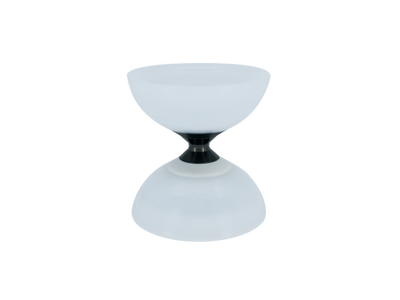
Three one-way bearings in the axle. This is the standard, and it is the one we sell most of.
- What it does: accelerates predictably, holds speed long enough for any combo you are likely to build, and survives being dropped on concrete.
- What it costs: 32 € for the Echo 2.0 Bearing, 60 € for the Falcon, which has the weather-tolerant cups for outdoor use. As a spare part on its own, the 3-B axle is 29 €.
- Who it is for: everybody, from a first bearing diabolo to stage work. If you are unsure, this is the answer.
Five bearing (5-B)
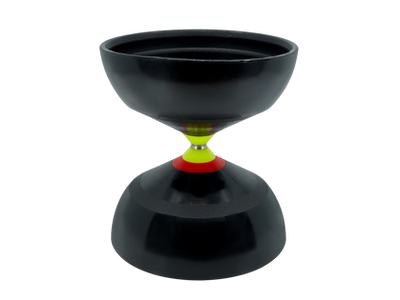
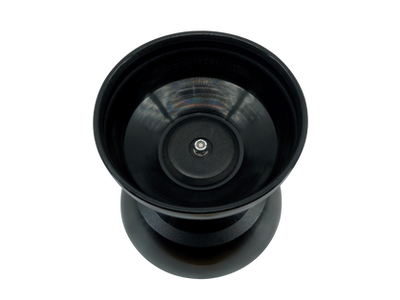
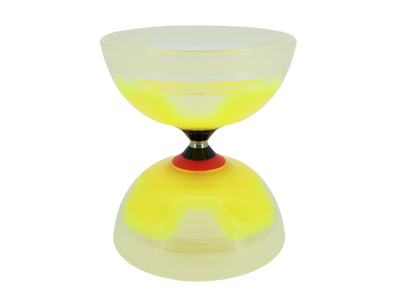
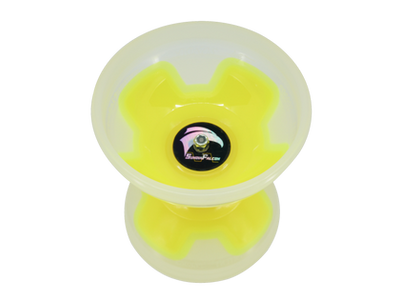
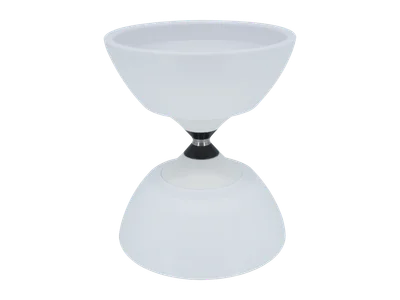
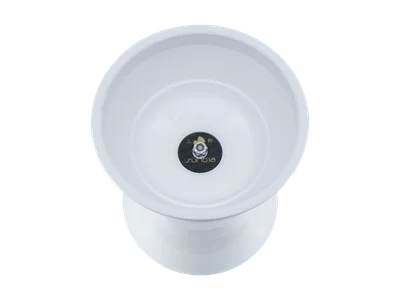
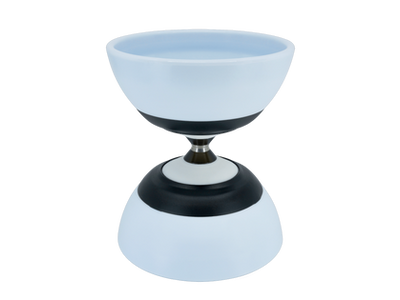
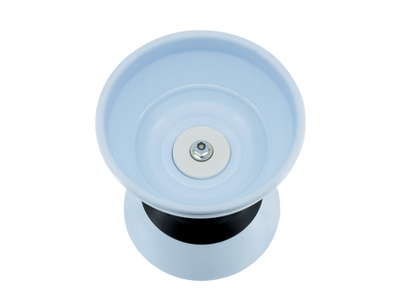
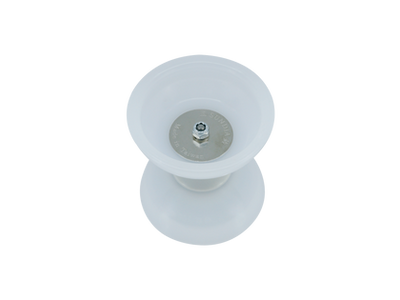
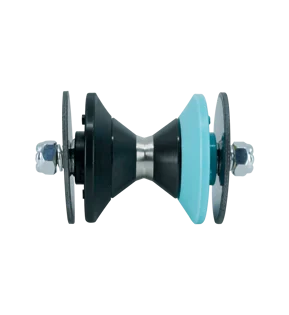
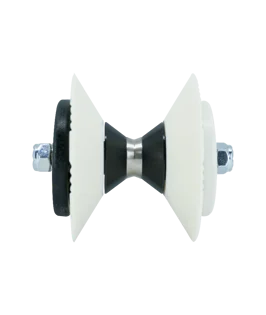
Five bearings instead of three. There are two different 5-B axles, and they are not two versions of one part: they are two designs, for two families of diabolo, and only one of them carries the fragility the 5-B is known for. Both are pictured further down this page.
The 5-B for the Falcon, Shining, Fly and the rest
The 5-Bearing Axle at 35 €, which fits every Sundia model except the EVO.
- What it does: accelerates noticeably faster. With five bearings sharing the load, a short sharp pull puts in speed that a 3-B would need two pulls to reach.
- What it costs: more money and more fragility. This is the longer of the two assemblies, so there is more to bend in a bad drop, and there are five bearings to eventually replace rather than three.
- Who it is for: competition. A one-minute routine is won on how fast you can recover speed between tricks, and that is exactly what this axle buys. For practice it is a lot of money for a difference you will rarely feel.
The 5-B on the EVO
The EVO 5-B axle at 36 €, fitted to the EVO G3 5-B at 66 €. It goes into EVO hard cups and nothing else.
- What it does: the same five bearings and the same quick acceleration, on a different and sturdier design. This is the 5-B we are happy to recommend for ordinary practice, not only for the clock.
- What it costs: 36 € as a spare part. One thing to know: since 2020 the washer locks the axle hard. The diabolo stays tight far longer, and the axle is difficult to take back off once it is on.
- Who it is for: an EVO player who wants the acceleration without the fragility the other 5-B asks for in return.
Magforce
Three bearings plus magnetic rings, Sundia’s 2021 design, on the Magforce NX at 74 €.
- What it does: the magnets sit in the hubs and in the axle, facing each other closely enough to repel. That repulsion holds a gap open, so the bearing axle is isolated and never comes into friction with the hubs. Less friction lost means the spin runs smoother and quieter and keeps its speed longer, on the same three bearings.
- What it costs: the most of the four, and the magnets are shared between the axle and the hubs, so it is not a part you retrofit to another diabolo.
- Who it is for: a player who already knows they like bearing play and wants the best spin quality available. It is the one we would buy for ourselves.
What fits what
Sundia bearing axles swap freely between models. There are two exceptions, and they are the two models with cups of their own:
- The EVO takes EVO axles only. Its cups are a different shape, so neither the 3-B nor the 5-B above will go in.
- The Magforce NX takes the Magforce axle only. Half of the magnets are in its hubs, and a plain axle has nothing there to repel.
Everything else, the Falcon, Shining, Soarin, MHD Pro, Marble, Fly, Echo and Sun, shares the same 1-B, 3-B and 5-B axles. A Falcon axle goes into a Shining and back again, which is what makes moving up from a single bearing a 29 € decision rather than a new diabolo.
What actually wears out
The bearing, eventually, and always sooner if it is run dry or washed. A drop of Long Spin Oil when the spin starts to sound dry is the whole maintenance routine. Every Sundia axle unscrews, and we stock the bearings separately, so a worn one is a repair rather than a new diabolo.
Bearing models come with the harder or semi-flexible cups. Soft cups pass the shock of a drop straight into the bearings, which is why Sundia does not pair them.
Bottom line
Buy triple bearing. The Echo 2.0 Bearing at 32 € if you are finding out whether you like bearing play, the Falcon if it will live outdoors. Take a single bearing only on the Micro, where it is the axle that fits. Choose the Magforce NX when you know you want the smoothest spin there is, and a 5-B when you are competing on the clock, the EVO G3 5-B if you want that speed with less to worry about in a drop. All of them are on the bearing axle page.
Questions
How many bearings does a diabolo need?
Three. Triple bearing (3-B) is what we recommend for training at every level and what most players keep for years. One bearing still leaves a lot of friction, five accelerate faster but cost more, and the Magforce adds magnets rather than bearings.
Is a single bearing (1-B) diabolo worth buying?
Only on the Micro, which ships with one because its 8.9 cm cups leave no room for a longer axle. On a full-size diabolo a 1-B still has noticeable friction and does not take speed the way a triple does, and the axle costs 25 € against 29 € for the 3-B. Four euros is not a reason to accept the slower axle.
Is a 5-B diabolo faster than a 3-B?
It accelerates faster, which is not the same as spinning longer. Five bearings share the load, so each turn of the wrist puts more speed in. Over a one-minute competition routine that matters; over an afternoon of practice it does not.
Are the two 5-B axles the same part?
No. The 35 € 5-Bearing Axle fits every Sundia model except the EVO and is the longer assembly, which is why a bad drop is harder on it. The 36 € EVO 5-B axle is a different design that fits EVO hard cups only, and it is the sturdier of the two.
What does the Magforce bearing actually do?
Magnetic rings sit in the hubs and in the axle, facing each other closely enough to repel. That repulsion holds a gap open, so the bearing axle is isolated and never rubs against the hubs. The result is a smoother, quieter spin that holds its speed longer than a plain 3-B, on the same three bearings.
Do diabolo bearings need maintenance?
Very little. A drop of Long Spin Oil when the spin starts to sound dry, and the axle nuts re-tightened now and then. Do not wash a bearing out with water or solvent: it removes the grease it needs.
Can I upgrade the bearing in a diabolo I already own?
Usually yes. Sundia axles unscrew, and the 1-B, 3-B and 5-B axles are interchangeable across the Falcon, Shining, Soarin, MHD Pro, Marble, Fly, Echo and Sun, so moving up from a 1-B to a 3-B is a 29 € part. The two exceptions are the EVO, whose cups take EVO axles only, and the Magforce NX, whose hubs hold half of the magnets and so take the Magforce axle only.