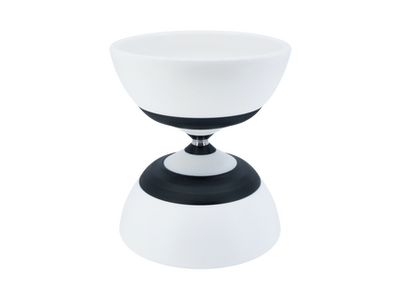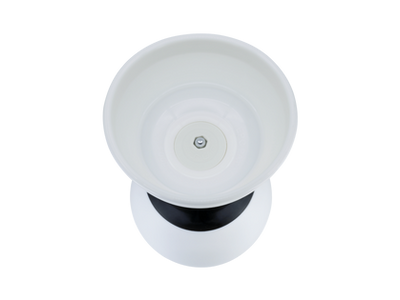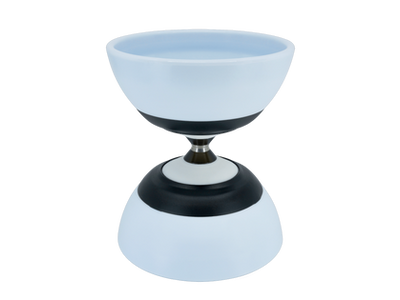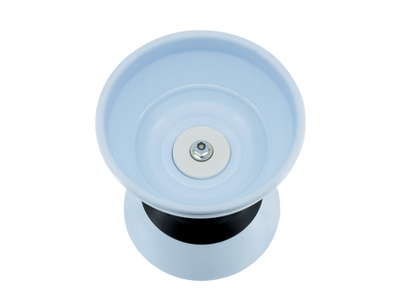

Sundia vs Henrys diabolos
Sundia and Henrys compared model by model, from the EVO G2 and Henrys Circus to the Magforce and Vision Free, on stability, cups, axles, weight, parts and price.
Updated
DiaboloFocus imports Sundia for Europe and sells the Sundia products named here, plus some string and sticks from other brands. Recommendations are the shop’s own view. Prices of products sold here include VAT, shipping extra (see shipping and returns). Other brand names belong to their owners, who are not connected to this shop.
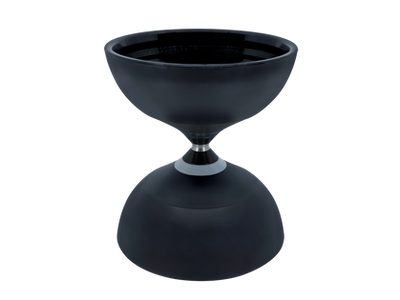
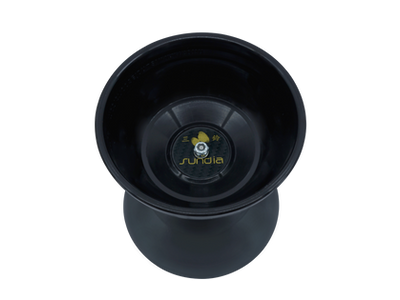
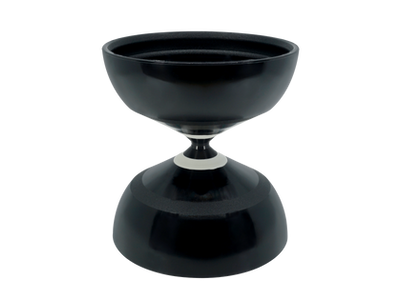
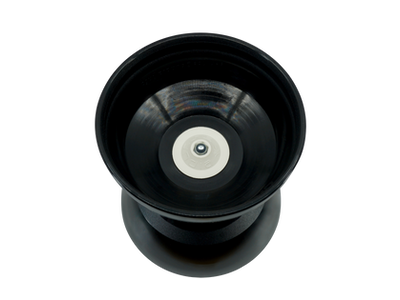
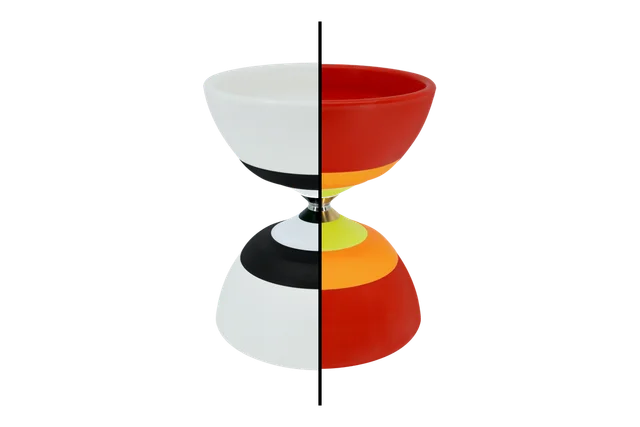
Sundia and Henrys are the two brands a European beginner is most likely to be offered, and they are built for different players. Henrys makes rugged rubber diabolos with rounded, grippy cups. Sundia makes diabolos with a sharp, low-friction cup edge for corrections, a stability ring on the EVO, and four axle systems. The Circus is the more durable of the two. Where Sundia shines, in our experience, is performance: a beginner learns faster on it, and a professional can push technical limits on it.
The two companies
Henrys is a German juggling manufacturer whose catalogue runs from juggling balls and clubs to diabolos and yo-yos. Its diabolos, the Circus, Vision and Jazz families, have been the school and circus standard in Germany for decades and are made in Germany.
Sundia is a Taiwanese manufacturer that only makes diabolos and diabolo parts. It introduced the first ball-bearing diabolo in 2005 and the first magnetic bearing axle in 2021, and its diabolos are widely used at the top competitive level in Taiwan and Japan. More in who is Sundia.
Who is comparing
Guillaume Karpowicz, who runs the shop, was sponsored by Henrys before moving on to Sundia, and can speak for both from years of training: a Henrys Circus through his first years as an artist, Sundia since. He moved because it played more stable and lighter in his hands, took parts and colours more readily, and its bearing models felt steadier. That is the experience behind the verdicts below: one player’s view, not a measurement.
Model by model
Sundia figures and prices are the manufacturer’s specifications and this shop’s prices on 13 September 2026. Other brands’ weights and sizes are from the manufacturers’ published specifications where available and are otherwise approximate (marked “about”); their prices are the manufacturer’s recommended retail price where we have one and otherwise the ranges seen at European online retailers on 3 September 2026; they vary by shop and may have changed since.
| Sundia | Henrys | |
|---|---|---|
| Budget fixed axle | Echo 2.0, 215 g, 24 €; simpler materials, wears sooner than an EVO | Vision, about 240 g, 39.50 € |
| Main fixed axle | EVO G2, 240 g, 45 €, our recommendation at every level | Circus, about 270 g, 49.90 € |
| Budget bearing | Echo 2.0 Bearing, triple bearing, 32 €; nylon axle around a metal centre, wears sooner | Vision Free, single bearing, 57.00 € |
| Bearing main | EVO G3 5-B, 250 g, 66 €; Magforce, magnetic triple bearing, 256 g, 70 € | Circus Free, single bearing, 67.50 € |
| Sharp low-friction cup edge | Nearly every model, plus a stability ring on the EVO’s cup | None, rounded cups |
| Replaceable cups | Yes, 16 € per cup | Yes, sold singly |
| Axle choice | Fixed, 1-B, 3-B, 5-B, magnetic 3-B; swappable on one body | Fixed or single bearing (Free); swappable on one body |
| Fixed-axle assembly | Self-locking washers, tightened by hand | Screw and washers, needs a tool |
| Bearing-axle assembly | Needs a tool | Needs a tool |
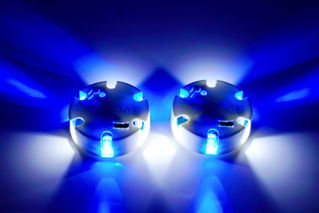
| Add-ons | LED kits, spinning bolt, dragon tail, narrow hubs | None found in Henrys’ catalogue (Sept. 2026) |
| Weight tuning | Plastic, carbon or metal washers; normal or heavy rings on the EVO | None found in Henrys’ catalogue (Sept. 2026) |
| Made in | Taiwan | Germany |
Where each one is stronger
Henrys is stronger on brute durability. A Circus is 49.90 €, more than an EVO G2, but it is rubber all the way through; it can be thrown at a wall, and there is nothing to adjust and nothing to lose. For a school that hands diabolos to a new class every week, that is worth a lot. The trade-off is stability, and it comes from two plain facts of the shape. The Circus’s cup is rounded and made of a grippy material, so when the string touches it to correct a lean it meets a wide patch of rubber, and every correction costs spin. Sundia moulds its cups with a sharp edge for that moment, and the EVO adds a stability ring on its cup: an edge in a low-friction material, so the string touches one point and slides off, and the diabolo keeps its speed. Weight is the same kind of trade-off: the heavier Circus holds its line well outdoors in wind, while a lighter diabolo is what fast tricks and, above all, multiple diabolos ask for.
Where Sundia is stronger, in our experience:
- Stability. The edge above, and the EVO’s ring: a lean is corrected with one touch of the string and no lost spin. This is the difference a beginner feels in week two.
- Progression. The same EVO G2 you learn on takes a triple-bearing axle later, as a Henrys does with its Free axle; Sundia adds narrow hubs for two-diabolo work and LED kits for shows on the same body.
- Travel. A Sundia fixed axle is held by self-locking washers and comes apart and back together by hand with a twist, so a touring artist can flatten a fixed diabolo into a suitcase without tools. Henrys’ screw and washers need a tool. Bearing axles need a tool on both brands.
- Bearing quality. Sundia’s triple bearing, five bearing and magnetic axles are, in our view, the reference in the bearing world. Henrys’ Free models use a single bearing centre.
- Weight. Sundia fixed-axle models sit at 215 to 240 g; the Circus at about 270 g is on the heavy side for children and for long sessions.
- Parts. Cups, hubs, axles, bolts and washers are all sold separately.
Bottom line
Buy Henrys for a very small child or a class set that has to survive anything. Buy Sundia if stability and performance come first: the EVO G2 at 45 € for fixed axle, the Magforce at 70 € for a bearing. See also the best diabolo for beginners.
Questions
Is Sundia better than Henrys?
In our view, yes, for anyone who wants to progress beyond the basics. Sundia gives its cups a sharp, low-friction edge for corrections, a stability ring on the EVO's cup, and offers fixed, triple-bearing, five-bearing and magnetic axles. Henrys builds durable rubber diabolos with a fixed steel axle or a single-bearing Free axle, and no ring. For a toddler or a circus school that only needs something indestructible, Henrys is a fine choice.
Which is more durable, a Sundia EVO or a Henrys Circus?
The Circus's rubber shells are close to indestructible and survive concrete. The EVO's soft cups take normal drops for years, and if one cup does crack it is replaced for 16 € instead of buying a new diabolo.
Why do professionals use Sundia rather than Henrys?
Stability under correction. The EVO's stability ring, and the sharp low-friction cup edge on the Magforce and Falcon, mean the string touches one point when you fix a lean, which is what fast, multi-diabolo and vertical play depend on. The bearing options come from the same design.
Where can I buy Sundia in Germany?
DiaboloFocus in Berlin is Sundia's official importer for Europe and stocks the whole range. Henrys is a German company and is sold in most juggling shops.
Something to add, or disagree?
Guillaume reads every suggestion and updates the guide when it holds up.
Suggestions come from members, so a correction that is used can carry your name.Log in to suggest a change
Thanks, your note is in. If it holds up, the guide will change.