
Soft vs hard diabolo cups
Soft or hard diabolo cups compared on cold and humid weather, drops, stage shows, stacking for high throws, bearings and children, with our pick.
Updated
DiaboloFocus imports Sundia for Europe and sells the Sundia products named here, plus some string and sticks from other brands. Recommendations are the shop’s own view. Prices of products sold here include VAT, shipping extra (see shipping and returns). Other brand names belong to their owners, who are not connected to this shop.
Soft cups are our pick for almost everyone, and always in Europe. They stay grippy in the cold, take drops without cracking, hurt less when they land on you, and they are the only cups you can stack for hand-thrown high play. Hard cups still have two real uses: hot, humid climates, and stage shows, where a dropped diabolo that bounces straight back up gives you a second chance.
At a glance
| Soft cups | Hard cups | |
|---|---|---|
| Cold weather | Stay flexible and grippy | Lose grip, can crack in winter |
| Hot, humid weather | Build up friction with the string fast | Stay slippery and fast |
| Durability | Take drops on concrete | Rarely crack, mostly in the cold |
| After a drop | Fall to one side | Bounce straight back up |
| Stacking for high throws | Hold together in the hand | Slip apart |
| Falling on a child | Much gentler | Can really hurt |
| On a bearing axle | Pass the shock to the axle | Protect the bearing |
| Our pick for | Almost everyone, Europe, children, high play | Humid climates, stage shows |
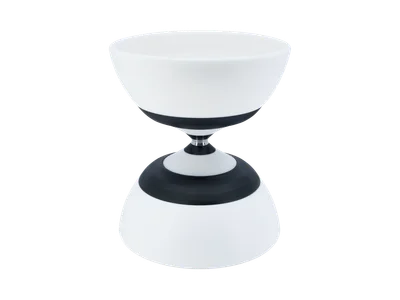
| For example | EVO G2 in soft cups | EVO G3 |
Cold and humid weather
Climate decides more than anything else. Practice halls, parks and streets in Europe are cold for half the year. Soft cups stay flexible there and keep their grip on the string. Hard cups get stiffer in the cold, lose grip and, in winter below about 5 °C, can crack on a hard drop.
Tropical weather turns this around. In Taiwan, where the air is hot and wet most of the year, most players choose hard cups. In humid air a soft cup builds up friction with the string very quickly, and the diabolo slows down and gets harder to control. A hard cup stays slippery in the same conditions and keeps its speed.
When the diabolo hits the floor
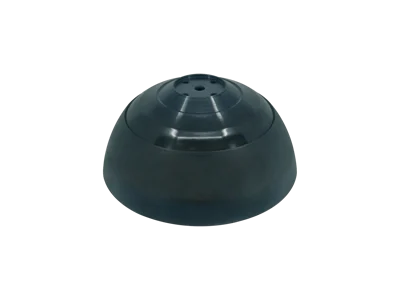
This is where hard cups win. A dropped hard-cup diabolo bounces straight back up off the floor, which gives you a second chance to catch it. On stage, in front of an audience, that second chance is a real advantage.
A soft cup grips the floor when it lands. The friction pulls it to one side, and the diabolo rolls away instead of coming back up. Most of the time there is no second chance.
Stacking diabolos for high throws
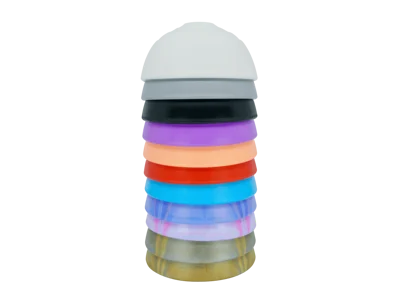
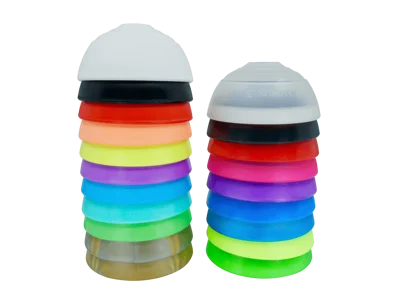
Soft cups win here, clearly. When you practise high with three, four or more diabolos, one diabolo spins on the string and the others wait stacked in your hand, each one thrown by hand in turn. This hold is called the grip. It only works because the cups stick to each other a little, and that takes the friction of soft cups. Hard cups are slippery, so the stack slides apart in your hand.
If you practise high with hand throws, choose soft cups.
Durability and breakage
Soft cups take hundreds of drops on concrete without damage. Hard cups are tough too, but they can crack, mostly in winter and on cold floors. It is rare. When it happens within two years of purchase, we usually replace the cup free of charge. After that, a single soft or hard EVO cup costs 16 €, so a cracked cup never means a new diabolo.
Children
Children drop the diabolo a lot while they learn, and it lands on hands, feet and sometimes heads. A soft cup gives on impact and hurts much less. A hard cup can be really painful when it falls on you. For a child’s first diabolo, choose soft cups (more in diabolo for kids).
Bearing diabolos: why firmer cups are normal
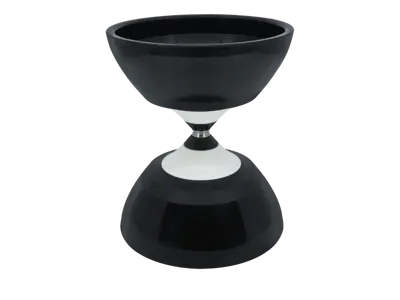
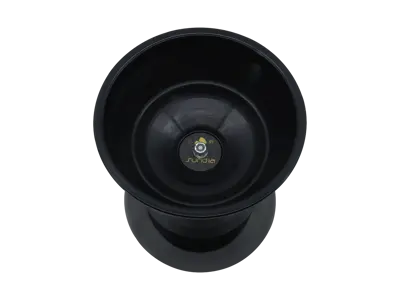
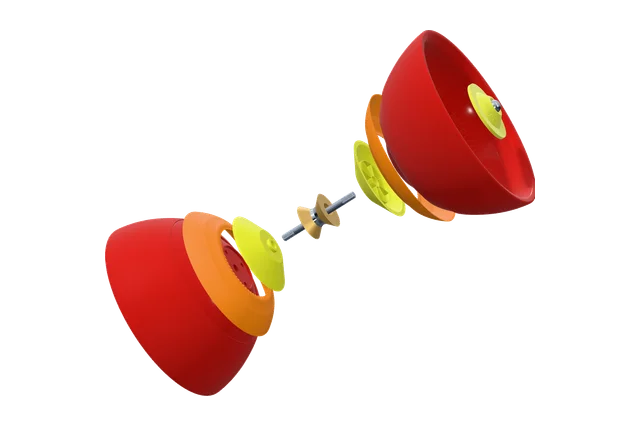
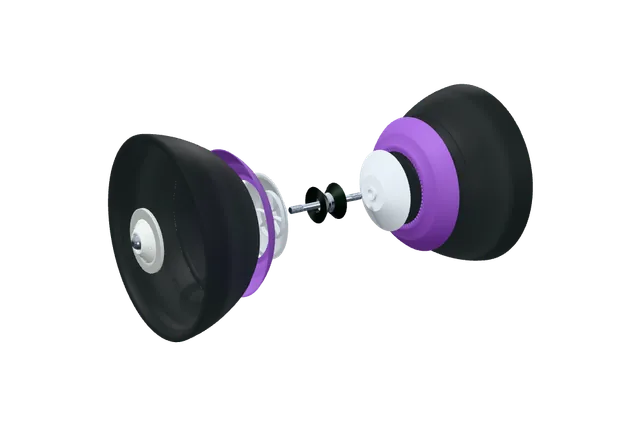
This part surprises people. Most bearing diabolos have hard or semi-hard cups, and the reason is the bearing. When a diabolo lands, a soft cup passes the shock straight to the axle, and a bearing axle is made of small parts. A firmer cup protects it. So on a bearing diabolo, the softest possible cup is not the goal.
Cups are not simply soft or hard, either. They sit on a scale:
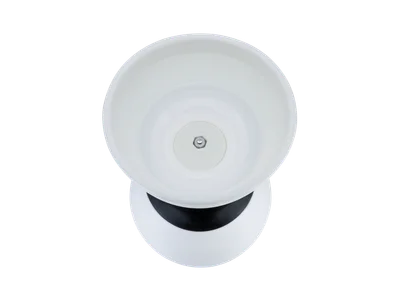
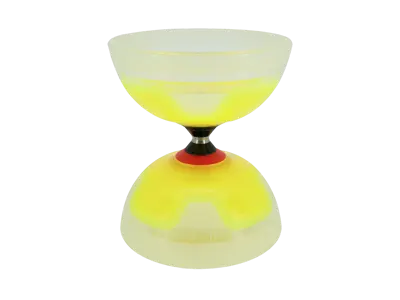
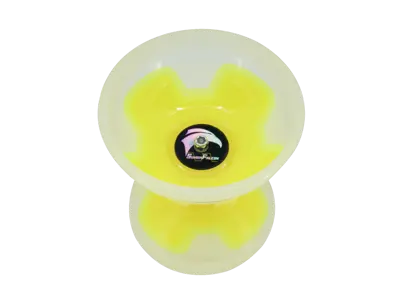
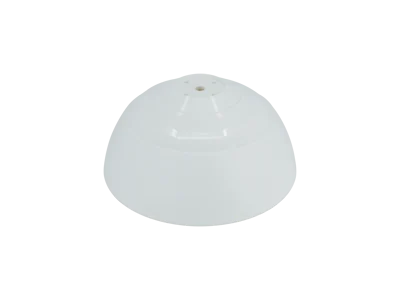
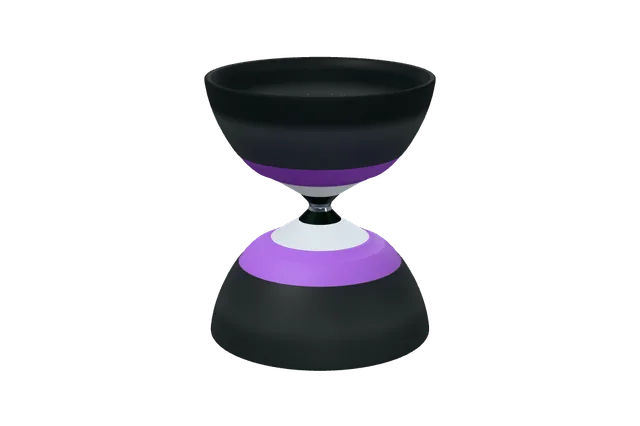
- Hard: the EVO G3’s clear cups are fully hard and barely bend. The EVO G3 and the EVO G3 5-B, whose axle fits hard cups only, sit on this side.
- In between: the Falcon has a firm inner cup with a softer rim, and the cups of the Magforce NX give a little. Both are bearing diabolos.
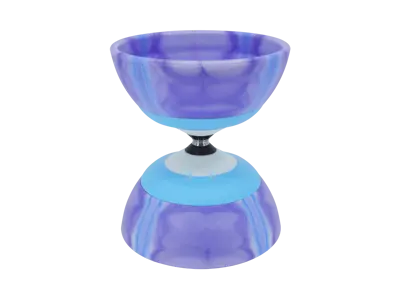
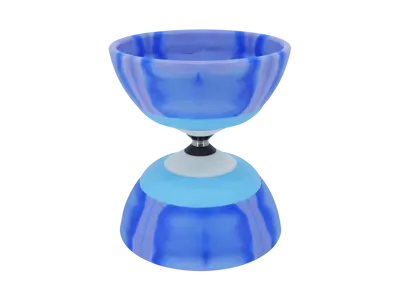
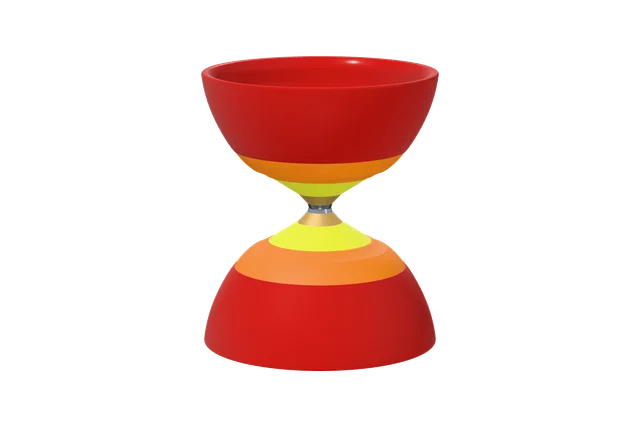
- Soft: the EVO G2 in soft cups, our recommendation for fixed-axle play.
How soft is each model?
The EVO and Magforce NX product pages show a short 3D animation of a cup under a firm squeeze, and the diabolo configurator has a Squeeze button in its 3D view that does the same on your build. Both are estimates: they show roughly how far a cup bends when you squeeze it firmly by hand, not a measurement. Our 3D models are close, but not all of them are exact yet.
Hardness also varies inside one model. The plastic differs slightly from one colour to the next, so some colours of the EVO’s soft cups are a little softer than others. We will make the animation more precise over time, model by model and colour by colour.
Bottom line
- Most players, and anyone in Europe: soft cups. The EVO G2 in soft cups is the one we recommend, 45 €.
- High throws with several diabolos: soft, for the grip.
- Children: soft.
- Stage shows: hard cups are worth weighing for the straight bounce after a drop.
- Hot, humid climate: hard, like most players in Taiwan, for example the EVO G3.
- Bearing diabolo: hard or semi-hard cups are normal there, and they protect the bearing.
Questions
Should I buy soft or hard diabolo cups?
Soft, for almost everyone and always in Europe. Soft cups stay grippy in the cold, take drops without cracking, hurt less when they land on you and are the only cups that stack for hand-thrown high play. Hard cups make sense in hot, humid climates and for stage shows.
Why do players in Taiwan prefer hard cups?
Humidity. In hot, wet air a soft cup builds up friction with the string very quickly and the diabolo slows down. A hard cup stays slippery in the same air and keeps its speed.
Do hard diabolo cups break?
Rarely, but they can, mostly in the cold. If a hard cup cracks within two years of purchase, we usually replace it free of charge. After that, a single EVO cup costs 16 €.
Why do bearing diabolos often have hard cups?
To protect the bearing. A soft cup passes the shock of a drop straight to the axle, and a bearing axle is made of small parts. Hard or semi-hard cups are normal on a bearing diabolo, so the softest cup is not the goal there.
Which cups are best for high throws with several diabolos?
Soft. For three, four or more diabolos high, the diabolos waiting to be thrown are stacked in one hand, and only soft cups have the friction to hold that stack together.
Something to add, or disagree?
Guillaume reads every suggestion and updates the guide when it holds up.
Suggestions come from members, so a correction that is used can carry your name.Log in to suggest a change
Thanks, your note is in. If it holds up, the guide will change.