Diabolo size and weight guide
What diabolo weight and cup diameter mean for play, which sizes exist from the Micro to the Magforce NX, and how to choose for hand size, age and style.
Updated
DiaboloFocus imports Sundia for Europe and sells the Sundia products named here, plus some string and sticks from other brands. Recommendations are the shop’s own view. Prices of products sold here include VAT, shipping extra (see shipping and returns). Other brand names belong to their owners, who are not connected to this shop.
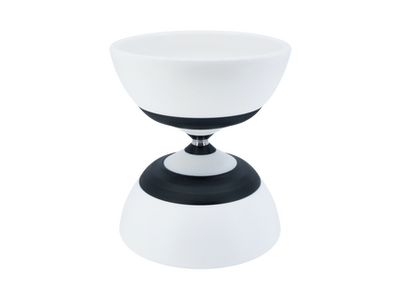
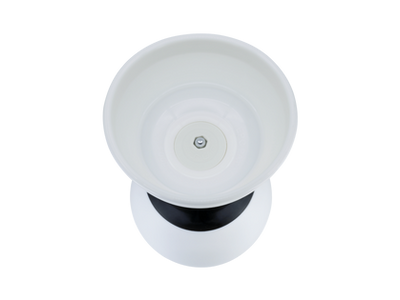
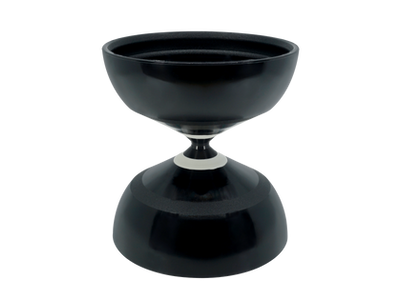
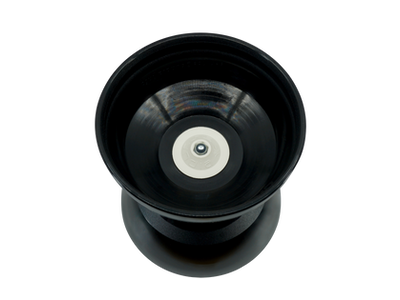
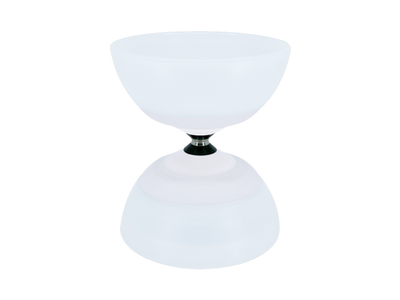
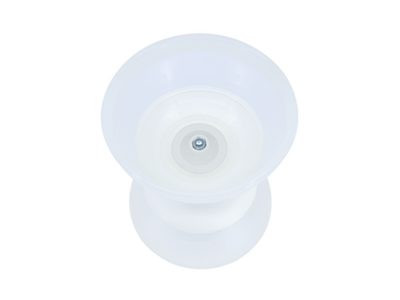
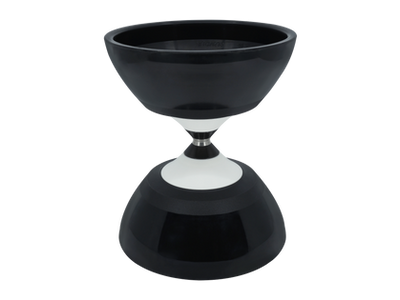
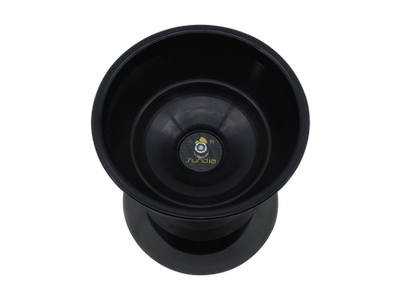
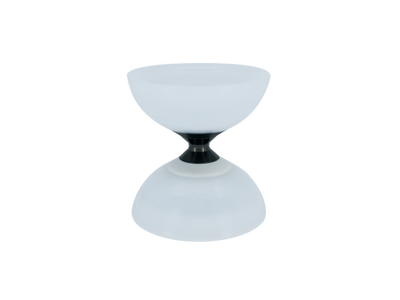
Nearly every real diabolo is the same size: cups of 12.7 to 13 cm and a weight of 215 to 265 g. Choosing by size is therefore mostly choosing at the edges, lighter for children and multi-diabolo work, heavier for wind and bearings. Inside the standard range, the hub and cups decide how a diabolo plays, not the grams.
The sizes that exist
Sundia figures; other brands sit in the same band.
| Class | Cup diameter | Weight | Examples | For |
|---|---|---|---|---|
| Micro | about 8 cm | about 120 g | Micro | Yoyo-style play: loops, slacks, magic knots |
| Ultra light | 12.7 cm | 189 g | EVO Ultra Light | Three and four diabolos indoors |
| Light standard | 12.7 to 12.8 cm | 215 to 240 g | EVO G2, Echo 2.0, MHD Pro | First diabolo, children, two diabolos |
| Standard bearing | 12.7 to 12.9 cm | 250 to 265 g | Falcon, Magforce, Marble | All-round bearing play |
| Large | 13.0 cm | 265 to 277 g | Magforce NX, Shining, Fly bearing | Outdoor, wind, long spins |
What weight changes
- Acceleration. A lighter diabolo comes up to speed with fewer pulls. That is why children and multi-diabolo players go light.
- Spin time and wind. A heavier diabolo holds its spin longer and drifts less in a breeze, which matters outdoors and on a bearing.
- Fatigue. 30 g sounds like nothing; after an hour of throws it is the difference between practising and stopping.
What diameter changes
A wider cup catches the string more easily on throws and is slightly steadier in rotation, at the cost of speed in tight tricks. The 2 mm the Magforce adds over the EVO is felt as calm; the extra 8 mm of a 13.5 cm diabolo is felt as slow.
How to choose
- Standard size, always, unless you know why you want an exception. “Mini” and “junior” diabolos of 10 cm and under are toys.
- Age 6 to 10, or small hands: the same EVO G2, 240 g; its soft cups forgive drops. The Echo 2.0 at 215 g is a lighter budget alternative, less durable and a little less steady. See diabolo for kids.
- First diabolo, teenager or adult: EVO G2, 240 g. See the best diabolo for beginners.
- Bearing play: 250 to 265 g is normal; the extra mass is the price of the axle and helps the spin. See fixed axle or bearing axle.
- Two, three or four diabolos: light. A second EVO G2 with narrow hubs for two; the EVO Ultra Light for three and up.
Bottom line
Buy the standard size and choose the weight by the axle: 240 g on a fixed axle, for children and adults alike, 250 to 265 g on a bearing.
Questions
What is the standard diabolo size?
A cup diameter of 12.7 to 13 cm and a weight of 215 to 265 g. Almost every serious diabolo, from the Sundia EVO to the Henrys Circus, is built to that size; the differences between them are in cups, hub and axle, not in size.
Is a heavier diabolo more stable?
Slightly, at the same spin speed, but it is slower to accelerate and tires the arms. Stability comes mostly from the edge the string meets: the EVO's sharp stability ring steadies a 240 g diabolo more than an extra 30 g would.
Which diabolo size for a child?
The same standard size, and the same model we recommend to adults: the Sundia EVO G2 at 240 g, whose soft cups forgive a child's drops. The Echo 2.0 at 215 g is a lighter budget alternative, less durable and a little less steady. Small "mini" diabolos are toys, harder to keep running, and outgrown in a month.
What is an ultra-light diabolo for?
For indoor multi-diabolo practice. The 189 g EVO Ultra Light reduces effort when running several diabolos, but its lower inertia makes it more responsive to hand movements. Choose standard weight if forgiving stability is your priority; this is a specialist weight choice, not a price-based skill level.
Something to add, or disagree?
Guillaume reads every suggestion and updates the guide when it holds up.
Suggestions come from members, so a correction that is used can carry your name.Log in to suggest a change
Thanks, your note is in. If it holds up, the guide will change.