We use cookies for personalised content and advertising. With your permission, DiaboloFocus can also email you one reminder if you leave your basket. Accept all, decline all, or choose categories in Privacy settings. Site usage is measured with anonymous, cookieless analytics that store nothing on your device. See Privacy Policy
Privacy settings
Essential Cookies
Always on
Required for core site functionality including security, checkout, login, and shopping cart. These cannot be disabled.
Show cookies (18)
Display currency
Remembers the currency you choose for estimated local prices, and the last one shown so prices do not shift on the next page. Payments remain in EUR
Provider: DiaboloFocus. Duration: Until you clear your browser data
Product grid layout
Remembers the standard or compact product grid you selected
Provider: DiaboloFocus. Duration: 12 months
Offline notice
Remembers when you close the offline notice so it stays hidden during the same outage
Provider: DiaboloFocus. Duration: Until you reconnect or close the tab
Cookie consent
Remembers your cookie choices
Provider: DiaboloFocus. Duration: 12 months
Consent ID
A random number saved with each cookie choice, so the choice can be proven and you can refer to it. It is shown in Cookie Settings and used for nothing else
Provider: DiaboloFocus. Duration: 12 months
Sign-in
Keeps you signed in to your account and shows your name in the header, and whether there is news you have not read yet. After you sign out, it makes the next sign-in ask for your login again
Provider: DiaboloFocus. Duration: 90 days after a sign-in by email link or Google; 10 to 15 minutes while signing in; 12 months for the signed-out marker; your name until you close the tab
Account type
Set only for accounts with a separate account area; decides which account menu the header shows
Provider: DiaboloFocus. Duration: 12 months
Before signing in
Keeps what you started before you were asked to sign in, a like in the IN FOCUS gallery or a filled-in application form, so it is waiting when you come back
Provider: DiaboloFocus. Duration: The like until you close the tab; the application 24 hours
Holiday notice
Remembers for ten minutes whether shipping is paused for a holiday, so the notice in the top bar shows at once on the next page
Provider: DiaboloFocus. Duration: 10 minutes
Hidden cart suggestion
Remembers that you closed the product suggestion in the cart, so it stays hidden in the side cart and on the cart page
Provider: DiaboloFocus. Duration: Until you close the tab
Shopping cart
Remembers the items in your cart, shows their number and photos in the header, groups the products you added as a set, and links each line to its product page
Provider: DiaboloFocus. Duration: 6 months; the header preview and sets until you clear your browser data; the product links until you close the tab
Language
Remembers the language you chose, or the one your browser asked for on your first visit
Provider: DiaboloFocus. Duration: 12 months
Delivery country
Remembers the delivery country you chose, so the shipping cost and delivery dates are right the next time you visit. A second entry holds the country we preselected for you before you chose one
Provider: DiaboloFocus. Duration: Until you clear your browser data; 30 days for a country we preselected
Display choices
Remembers a display choice you made with a button: the dark cinema mode on video pages, a folded panel in your account, the small preview in the configurators
Provider: DiaboloFocus. Duration: Until you clear your browser data; the configurator preview until you close the tab
Measurement opt-out
Saved only if you ask us to stop counting your visits, so that we can honour it
Provider: DiaboloFocus. Duration: Until you clear your browser data
Security cookies
Fraud prevention and site security
Provider: Cloudflare. Duration: Session
Turnstile (bot check)
Confirms that a person, not a bot, is sending a form or using the help center’s ask box
Provider: Cloudflare. Duration: Session
Checkout form
Keeps what you typed in the checkout (never your card details) if you reload the page or go back to the cart
Provider: DiaboloFocus. Duration: Until you close the tab
Usage measurement
No cookies
We count visits and see which pages, products and searches visitors use. On checkout we also measure completed steps, selected options, broad error categories and active time; we never store what you type. There are no cookies, nothing is stored on your device, no profile is created, and your IP address is never kept. Because nothing is read from or written to your device, this needs no consent. If you would still rather not be counted, you can stop it here. Details are in the Privacy Policy.
Your visits are not counted. This is saved in this browser only.
Enable Functional Cookies
Remember your preferences like recent searches, recently viewed products, and whether you've seen the latest news.
Show cookies (5)
Recent searches
Shows your last searches when you open the search box
Provider: DiaboloFocus. Duration: Until you clear your browser data
Recently viewed
Shows the products you looked at last on product pages
Provider: DiaboloFocus. Duration: Until you clear your browser data
Your unfinished set
Remembers the diabolo, sticks and string you picked in the “Your first set” guide, so you can pick up where you left off
Provider: DiaboloFocus. Duration: Until you clear your browser data
Tips and notices
Remembers which tips, notices and news you have already seen or closed, and how many visits and pages you have had, so the site does not show you the same thing again
Provider: DiaboloFocus. Duration: Until you clear your browser data; the page count, your account summary and the date of the latest news until you close the tab
Personalization
Set only when you are signed in. Remembers whether you have ordered from us before, so pages can skip what you no longer need. It holds a single letter and no products, dates or order details. Cleared when you sign out
Provider: DiaboloFocus. Duration: 30 days
Enable Statistics
Lets us record a sample of visits as session replays (the pages opened, what was clicked and scrolled, with every typed input masked) to find where the shop is confusing. Recordings stay with us, are stored in the EU and are deleted after 30 days. Without your consent nothing is recorded.
Show cookies (1)
Session replay
Keeps a recorded visit together across pages, and remembers whether this visit was picked for recording
Provider: DiaboloFocus. Duration: Until you close the tab
Enable Marketing Cookies
Allows Google Ads to measure our advertising and show you relevant products on other sites (Google Tag Manager). Without your consent Google Tag Manager is not loaded, nothing is sent to Google and no advertising cookies are set.
Show cookies (2)
Google Ads
Measures whether a purchase followed a click on one of our ads, and lets Google show you our products on other sites
Provider: Google. Duration: 90 days
Purchase reported
Marks an order as already reported to Google Ads, so reloading the order confirmation never reports it twice
Provider: DiaboloFocus. Duration: Until you clear your browser data
Basket reminders by email
If you leave your basket, DiaboloFocus can send you one reminder after 24 hours using your verified account email. We measure reminder clicks and resulting purchases. This does not subscribe you to our newsletter. Turn this off here or stop reminders from any email.
The first trick, and the one every other trick is built on. Get the diabolo off the string, keep it straight, and put it back.
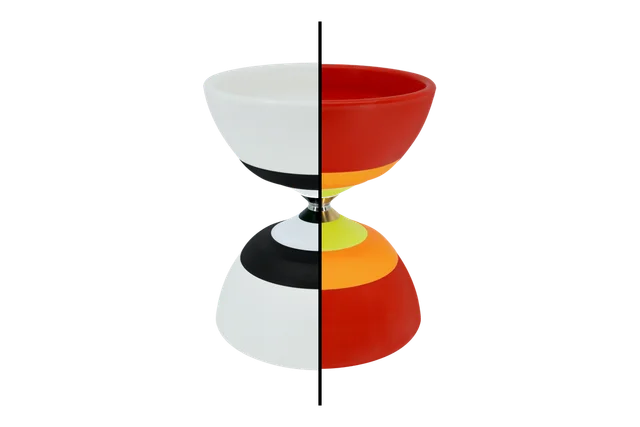
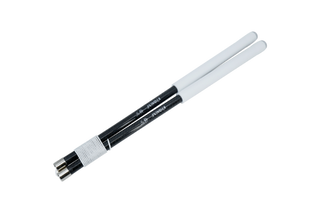
AxleEither axleOne diabolo
A throw is the whole of diabolo in one move. Everything later is a longer
version of it: the diabolo leaves the string, something happens in the air,
and it lands spinning straight. Get this clean and the rest is detail.
Before you throw
Speed first. A diabolo that is not spinning fast will tilt in the air no
matter how good the throw is, and there is nothing you can do about it once
it has left. Accelerate until the diabolo hums and stays level on the string
with no correction from you.
Stand with the string across the diabolo’s axle, sticks at hip height,
shoulders square. The diabolo sits on your right if you are right-handed.
The throw
Drop both hands slightly, then lift them apart in one movement. Both
hands, at the same time, apart rather than up.
The string does the work. You are not flicking the diabolo upward, you
are pulling the string out from under it, and the diabolo goes up because
the string leaves faster than it does.
Stop your hands where they end up. Do not follow the diabolo with the
sticks.
Start low. Knee height is a real throw, and a low throw you can repeat is
worth more than a high one you catch by luck.
The catch
Put one stick under the falling diabolo so the string meets the axle, and
let the diabolo push your hand down as it lands. That drop is what absorbs
it. A stiff hand bounces the diabolo straight back off the string.
Watch the axle, not the cups. The cups are wide and distracting, and the
axle is the part you have to hit.
What goes wrong
It tilts in the air. Almost always speed, not the throw. Accelerate more
before you go up.
It lands and stops dead. Your hands went up rather than apart, so the
string dragged across the axle on the way out and took the spin with it.
It shoots off to one side. Your hands lifted unevenly. The diabolo
follows the higher hand.
You catch it and it wobbles. You caught it stiff. Let the catching hand
fall with the diabolo for a few centimetres.
When it is working
You can throw and catch ten times in a row, at knee height, without the
diabolo tilting and without a rescue. That is the point at which throwing
higher starts to make sense, and the point at which the tricks that begin
mid-air become possible.